STEP-BY-STEP RECIPES
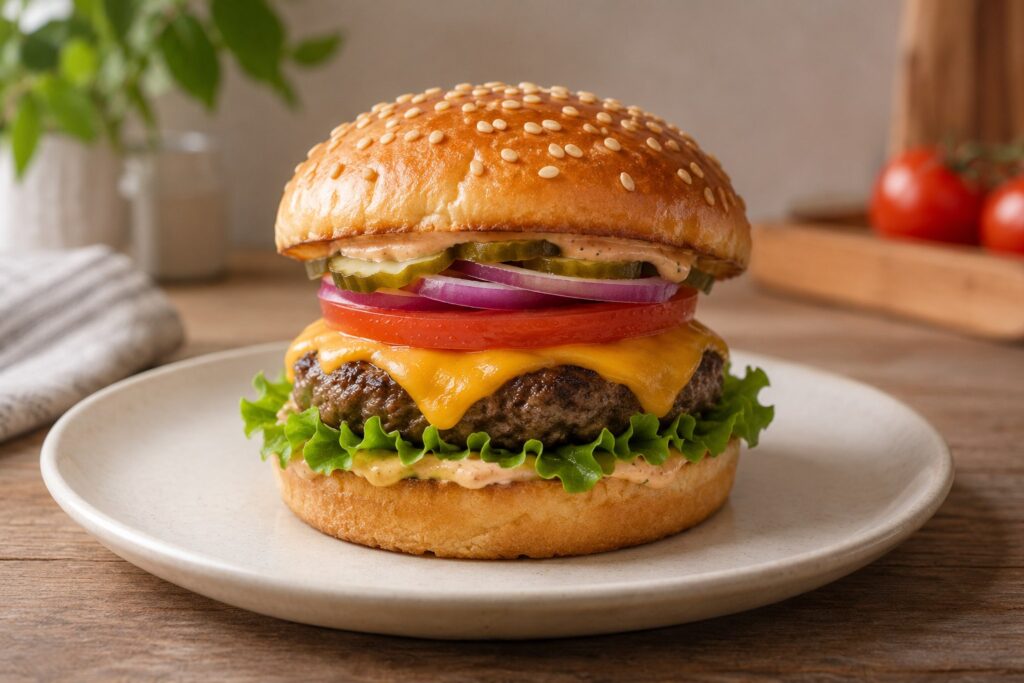
Skillet Cheeseburgers with Cheddar and Burger Sauce
BEFORE YOU BEGIN
Ingredients
Check off each ingredient as you prepare.
AT A GLANCE
- Prep time
- 20 min
- Cook time
- 15 min
- Servings
- 4
A good cheeseburger brings together a deeply browned beef patty, soft melted cheese and a bun that holds everything without getting in the way. These skillet cheeseburgers pair cheddar with crisp lettuce, ripe tomato, red onion and dill pickles. A quick mayonnaise, ketchup and mustard sauce adds creaminess and a gentle tang, balancing the richness of the beef.
You do not need a grill or a long ingredient list. A broad, heavy skillet provides steady heat for browning, while lightly toasting the buns gives their cut sides enough structure to stand up to the sauce and juices. Shape the beef gently, season it just before cooking and use a thermometer to judge doneness. The result is a practical burger supper with clear quantities and room to adapt the toppings.
Preparation: 20 minutes. Cooking: 15 minutes. Total: 35 minutes. Servings: 4 cheeseburgers. Cooking time assumes a skillet or griddle large enough to hold four patties without crowding; smaller pans require batches and extra time.
LET’S MAKE IT
The method
Prepare the sauce, toppings and beef patties
Set out a large heavy skillet or griddle, ideally 12–14 inches across with enough flat cooking area for four patties, a wide spatula, a small bowl, a kitchen scale and an instant-read thermometer. Have a clean plate ready for the cooked burgers. If your pan only fits two patties comfortably, cook in two batches rather than squeezing them together.
Mix 4 tablespoons mayonnaise, 2 tablespoons ketchup and 2 teaspoons yellow mustard in the bowl. Refrigerate the sauce while you prepare the other ingredients. Wash and dry 4 lettuce leaves. Cut 1 medium tomato into 4 broad slices and 1 small red onion into thin rings; use about 40 g of the onion. Drain 12 dill pickle slices and pat the tomato lightly with paper towel so excess moisture does not soak the buns.
Divide 680 g (1½ lb) cold 80/20 ground beef into four equal 170 g (6 oz) portions. Gently form each into a patty about 4 inches wide and ¾ inch thick, slightly wider than your buns. Make a shallow thumbprint in the center to reduce doming. Avoid kneading, squeezing or adding sauce to the meat: overworking makes a dense burger. Keep the patties refrigerated while you toast the buns, and wash your hands and any surfaces that touched raw beef.
Ingredient choices and substitutions
Four slices of mild or medium cheddar, about 20 g each, give a clear cheese flavor. American-style cheese melts readily too; use the same number of slices. Brioche, potato or plain hamburger buns can replace sesame buns. Use dairy-free slices if needed and check the buns and sauce labels for your requirements. This recipe's cooking guidance is for beef; ground poultry needs a different safe endpoint.
For a sharper sauce, replace the yellow mustard with the same quantity of Dijon. For less onion bite, rinse the sliced onion under cold water and dry it thoroughly. Keep the measured toppings modest so the finished burger is easy to hold.
Toast the buns and cook the cheeseburgers
Split 4 hamburger buns and spread their cut sides with 1 tablespoon softened unsalted butter in total. Warm the dry skillet over medium heat. Toast the buns cut-side down, in batches if necessary, for 1–2 minutes until lightly golden. Transfer to a board, toasted sides up. Wipe away any browned butter crumbs carefully with a paper towel held in tongs.
Raise the heat to medium-high and add 1 teaspoon neutral oil. Swirl it into a thin film. The oil should shimmer rather than produce heavy smoke. Season both sides of the four patties evenly with ¾ teaspoon fine salt and ½ teaspoon ground black pepper in total, immediately before they go into the pan.
Add the patties with a little space between them. Cook undisturbed for about 4 minutes, until a brown crust develops and a spatula slides underneath without tearing the meat. Flip once and cook for about 3–5 minutes more. Lower the heat to medium if the outside is darkening too quickly. Do not press the patties with the spatula; that squeezes juices into the skillet.
During the final minute, put 1 cheddar slice on each patty and cover briefly with a lid if needed to melt it. Insert the thermometer horizontally from the side into the center of each patty. Continue cooking until every patty reaches 160°F (71°C); the estimated minutes and the color of the meat are not reliable substitutes for this check. Transfer to the clean plate. Never return cooked burgers to the plate that held raw beef.
Heat, timing and common mistakes
A hot, uncrowded skillet browns beef; an overloaded pan traps moisture and encourages steaming. Allow the skillet to recover its heat between batches. If using two batches, give each patty the same thermometer check and expect the total cooking time to increase. Ventilate the kitchen, and reduce the heat if the oil starts smoking heavily. A dark crust does not mean the middle is done.
The safe beef temperature follows the FoodSafety.gov minimum internal temperature chart. Check each burger, especially if the patties vary in thickness.
Assemble, serve and store the burgers
Spread the sauce over the toasted bun halves, dividing it evenly. Place a dry lettuce leaf on each bottom bun, then add a hot cheeseburger patty. Finish each with 1 tomato slice, a few onion rings and 3 pickle slices. Add the bun tops and serve promptly while the cheese is soft and the toasted surfaces are still crisp.
Serving ideas
Serve with oven-baked potato wedges, a crunchy cabbage slaw or a simple green salad. For another straightforward supper on a different night, try our tomato chickpea skillet. You can also browse the complete recipe collection for more everyday meal ideas.
Storage and reheating
Store leftover cooked patties separately from the buns, sauce and fresh toppings. Refrigerate promptly in a shallow, covered container within 2 hours of cooking, or within 1 hour if the temperature is above 90°F (32°C). Keep the refrigerator at 40°F (4°C) or below and use the cooked beef within 3–4 days. Assembled burgers become soggy, so build fresh ones after reheating.
To reheat a chilled patty, put it in a skillet over medium-low heat with a small splash of water and cover. Turn as needed and heat until the center reaches 165°F (74°C), then add fresh cheese if desired. Toast the bun separately and add cold toppings afterward. Freeze cooled cooked patties in airtight packaging if you will not use them within the refrigerator window, and thaw in the refrigerator before reheating. See USDA guidance on safe leftovers for handling advice.